

Sem Resultado
Ver Todos Os Resultados
Newsletters
Agroportal
  • Login
  • Registar
  • Sugeridas
  • Notícias
    • Notícias
    • Nacional
    • Internacional
    • Comunicados

    teste

    PS acusa Bolieiro de tentar "omitir extraordinário percurso" socialista

    Ações de Sensibilização em Agricultura e Produção Biológica AGROBIO – Associação Portuguesa de Agricultura Biológica

    Ações de Sensibilização em Agricultura e Produção Biológica AGROBIO – Associação Portuguesa de Agricultura Biológica

    Iberdrola utiliza parque fotovoltaico como local de pasto para ovelhas

    Iberdrola utiliza parque fotovoltaico como local de pasto para ovelhas

    A economia circular ao serviço da qualidade dos solos

    Governo está a estudar formas de garantir que os alimentos cheguem a preços justos ao consumidor

    Preços dos alimentos. Governo diz procurar soluções justas

  • Opinião

    É urgente a recuperação dos ecossistemas para travar o declínio dos polinizadores

    Foi entre 2011 e 2016, em anos da Troika, que as explorações agrícolas portuguesas tiveram o melhor desempenho económico das ultimas três décadas

    António Covas

    Transição digital, inteligência territorial e incumbentes principais

    De olhos postos na agricultura do futuro

    João Dinis

    Secretaria de Estado da Agricultura afinal está em coma induzido…

    Manuel Cardoso

    Agricultura e manifs

    O poder de compra médio dos Agricultores Portugueses caiu em 2022 cerca de 25%

    Manuel Chaveiro Soares

    Importa ultrapassar o envelhecimento demográfico em Portugal

    João Vacas

    O semestre AGRI em antevisão

  • Eventos
  • Dossiers

    Dossiers I

    • Agricultura Biológica
    • Apoios
    • Artigos Técnicos
    • Biossoluções
    • Cadeia Alimentar
    • Fertilizantes
    • Financiamento
    • Fitofarmacêuticos

    Dossiers II

    • Florestas
    • Futuro da PAC
    • Inovação
    • Mercados
    • Newsletters e Revistas
    • Práticas Culturais
    • Seguros

    Últimas

    Governo está a estudar formas de garantir que os alimentos cheguem a preços justos ao consumidor

    15/03/2023

    Preços dos alimentos. Governo diz procurar soluções justas

    15/03/2023

    A conspiração da mercearia – Henrique Monteiro

    15/03/2023

    DECO defende criação de observatório de preços

    15/03/2023

    Governo cria observatório dos preços que existe desde 2015

    15/03/2023

    Preços dos alimentos. Governo diz procurar soluções justas

    15/03/2023
  • Serviços
    • Diretório
    • Emprego
    • Máquinas Agrícolas
    • Meteorologia
    • Terrenos Agrícolas
    • Arquivo Agroportal
Agroportal
  • Sugeridas
  • Notícias
    • Notícias
    • Nacional
    • Internacional
    • Comunicados

    teste

    PS acusa Bolieiro de tentar "omitir extraordinário percurso" socialista

    Ações de Sensibilização em Agricultura e Produção Biológica AGROBIO – Associação Portuguesa de Agricultura Biológica

    Ações de Sensibilização em Agricultura e Produção Biológica AGROBIO – Associação Portuguesa de Agricultura Biológica

    Iberdrola utiliza parque fotovoltaico como local de pasto para ovelhas

    Iberdrola utiliza parque fotovoltaico como local de pasto para ovelhas

    A economia circular ao serviço da qualidade dos solos

    Governo está a estudar formas de garantir que os alimentos cheguem a preços justos ao consumidor

    Preços dos alimentos. Governo diz procurar soluções justas

  • Opinião

    É urgente a recuperação dos ecossistemas para travar o declínio dos polinizadores

    Foi entre 2011 e 2016, em anos da Troika, que as explorações agrícolas portuguesas tiveram o melhor desempenho económico das ultimas três décadas

    António Covas

    Transição digital, inteligência territorial e incumbentes principais

    De olhos postos na agricultura do futuro

    João Dinis

    Secretaria de Estado da Agricultura afinal está em coma induzido…

    Manuel Cardoso

    Agricultura e manifs

    O poder de compra médio dos Agricultores Portugueses caiu em 2022 cerca de 25%

    Manuel Chaveiro Soares

    Importa ultrapassar o envelhecimento demográfico em Portugal

    João Vacas

    O semestre AGRI em antevisão

  • Eventos
  • Dossiers

    Dossiers I

    • Agricultura Biológica
    • Apoios
    • Artigos Técnicos
    • Biossoluções
    • Cadeia Alimentar
    • Fertilizantes
    • Financiamento
    • Fitofarmacêuticos

    Dossiers II

    • Florestas
    • Futuro da PAC
    • Inovação
    • Mercados
    • Newsletters e Revistas
    • Práticas Culturais
    • Seguros

    Últimas

    Governo está a estudar formas de garantir que os alimentos cheguem a preços justos ao consumidor

    15/03/2023

    Preços dos alimentos. Governo diz procurar soluções justas

    15/03/2023

    A conspiração da mercearia – Henrique Monteiro

    15/03/2023

    DECO defende criação de observatório de preços

    15/03/2023

    Governo cria observatório dos preços que existe desde 2015

    15/03/2023

    Preços dos alimentos. Governo diz procurar soluções justas

    15/03/2023
  • Serviços
    • Diretório
    • Emprego
    • Máquinas Agrícolas
    • Meteorologia
    • Terrenos Agrícolas
    • Arquivo Agroportal
Sem Resultado
Ver Todos Os Resultados
Agroportal

Pheromones, mulch and wildflowers – how to control pests without pesticides

por Horizon - EU
16-03-2021 | 23:00
em Últimas, Internacional, Notícias fitofarmacêuticos, Fitofarmacêuticos, Dossiers
Tempo De Leitura: 8 mins
A A
0
VISITAS
Partilhe no FacebookPartilhe no TwitterEnviar para o WhatsappEnviar para o TelegramEnviar para o LinkedIn

Most crops require pesticides to grow profitably. But many pesticides are too efficient at killing insects, often indiscriminately. They aim to hit specific crop pests but spray deadly fire at friendly insects and some may harm pollinators such as bees.

While the plight of bees attracts attention, other less visible insects are also in peril. Recent research found that 40% of all insects are declining, and a quarter could be wiped out within a decade.  

This is not inevitable. We can cut down on the use of many insecticides. To this end, scientists work on ways to protect crops from insect pests without wiping out beneficial insects which are often crucial to healthy ecosystems and provide sustenance to birds and other wildlife.

One strategy is to disrupt the mating of insects by jamming their chemical signals. Insects such as moths waft pheromones into the air, which allows males to follow the perfumed path to a female. The concoctions are usually specific to a species of insect.   

By making the same pheromones as the insects and releasing them over crop fields, it is possible to confuse the insects by hiding their pheromone trails and making it difficult for them to pair up. This technique is called mating disruption. 

The synthetic pheromones must be the same as those made by the insects, and unfortunately manufacturing them chemically is costly. As a result, mating disruption is mostly for high value fruits and vegetables, such as tomatoes, apples and pears.

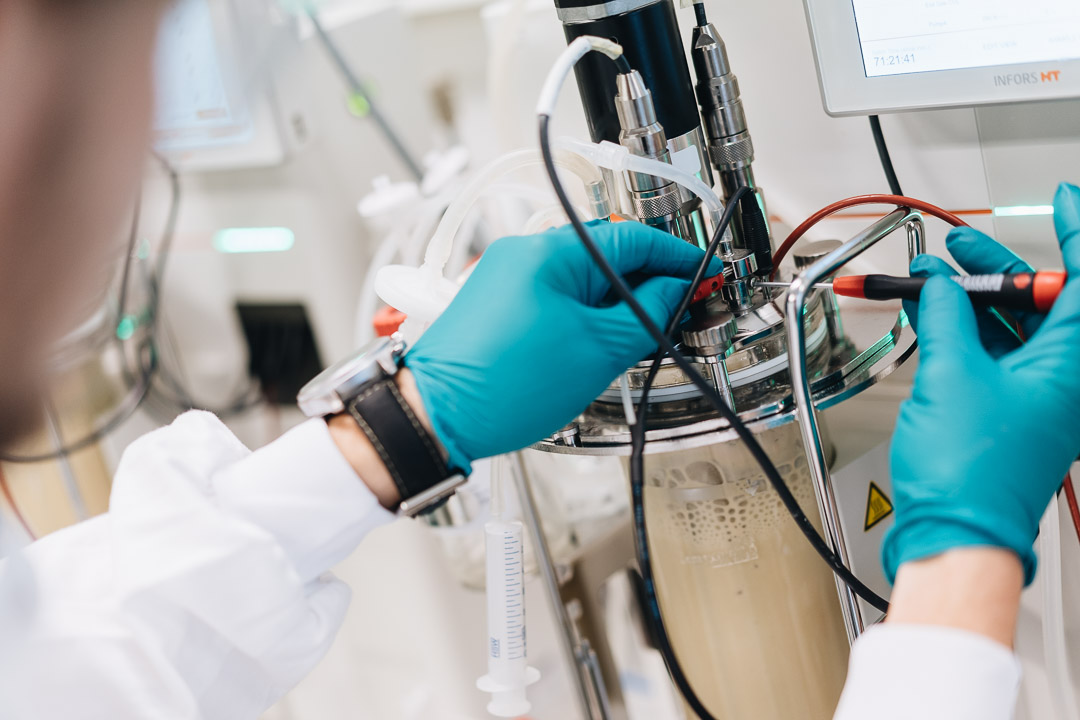
But now a European project called Olefine has developed a way to manufacture pheromones using yeast fermentation, making them a more affordable alternative to pesticides. This is done by introducing genes for insect enzymes into yeast.

‘We started with a lab process and then improved and optimised it,’ said Professor Irina Borodina at the Technical University of Denmark and founder of the company BioPhero. A yeast from cheese fermentation generated less than a milligram of pheromone per litre in a lab at the start of the project, but by the end was making grams per litre. ‘There are lots of magic tricks we can do to make the cell cooperate with us,’ said Prof. Borodina.

‘People, particularly younger people, care a lot about the environment and are concerned about contamination of groundwater by persistent insecticides.’

Prof. Irina Borodina, Founder, BioPhero

Fermentation

BioPhero is now working with several companies in Olefine and a project called PHERA in order to scale up the production of starter ingredients and turn them into cost-effective pheromone products that can be sprayed on commodity crops such as maize, soya bean, cotton and rice.  

‘There are two main limitations on the use of pheromones at a large scale,’ said Prof. Borodina. ‘One is price.’ Pheromone price needs to fall significantly for mating disruption to be widely adopted for row crops. ‘We can solve this by manufacturing pheromones using fermentation,’ said Prof. Borodina.

The other challenge is how to formulate and dispense them. Currently, pheromones are dispersed through plastic hangars – more suitable for greenhouses than large crop fields. BioPhero is working with other companies that are expert in formulating pheromones for slow release in crop fields.  

‘(PHERA partners) are formulating pheromones in sprayable formulations and trying them out in the field, in real conditions for mating disruption,’ Prof Borodina explained.

One pheromone will be useful to interfere with cotton ball worms (Helicoverpa zea) on cotton and soybean, and the diamondback moth (Plutella xylostella) on cabbages. The pheromone looked promising when sprayed onto cotton fields in Greece. A second pheromone will target fall armyworms (Spodoptera frugiperda), voracious crop eaters that spread from South America to Africa and Asia and consume grain crops, including maize.

Use of pheromones offers an environmentally friendly way to control specific insects, because ‘it doesn’t harm other insects, it doesn’t harm biodiversity,’ noted Prof Borodina. This supports the EU’s Farm to Fork strategy, which aims for a 50% pesticide reduction and 25% increase in organic farmland by 2030, she added.  

The pheromones are also non-toxic, and they evaporate quickly. They are made from fatty acids, and so are also rapidly eaten by microbes. Unlike many pesticides, they therefore do not persist in the environment.

Integrated

However, pheromones are not the only greener route to protect crops while cutting down on agrichemicals. Integrated pest management is a strategy that uses various control techniques to push levels of the pest down to acceptable levels. Pheromones can be part of this strategy.

In Germany, Dr Severin Hatt in the agroecology and organic farming group at the University of Bonn is sowing crops without agrichemicals in ways that he hopes will supress diseases, insect pests and weeds, as part of a project called WIDE-synergies. 

Predators such as ladybirds can help keep down the population of pests such as aphids on wheat. Image credit - Severin Hatt

He planted seeds at the experimental farming station outside Bonn to grow different combinations of winter wheat and winter broad beans. There are 32 strips of crop, each measuring 25 metres long and 9 metres wide, in eight different planting regimes. The idea is to compare the effect of techniques such as intercropping, living mulch and wildflowers with strips consisting of wheat or broad bean.

Pests and disease often are specific to one crop. Planting this one crop in a field makes it easy for a pest or disease to spread from one plant to the next, which is why agrichemicals are often so necessary in monocultures. Mixing two crops such as wheat and broad beans together – called intercropping – makes it less straightforward for a disease or pest to spread from plant to plant.

Another strategy is to sow a living mulch amongst wheat. ‘These are grasses and legumes that cover the soil,’ explained Dr Hatt. ‘It is an ecologically friendly way to reduce weeds.’ The living mulch will not compete against the crop but against weeds that try to grow there.

Dr Hatt will also plant wildflowers beside some crop strips to see if this encourages beneficial insects, in the hope that they will transfer to nearby crops. The wildflower strips will consist of a mix of a dozen flowers that will attract beneficial insects, including predators of crop pests such as aphids. ‘We will then monitor the predators of aphids, particularly ladybirds, hoverflies and lacewings, and some parasitic wasps,’ said Dr Hatt. He will check regularly to see how many aphids are in a crop strip and if there are more natural enemies of these pests in some situations than in others.
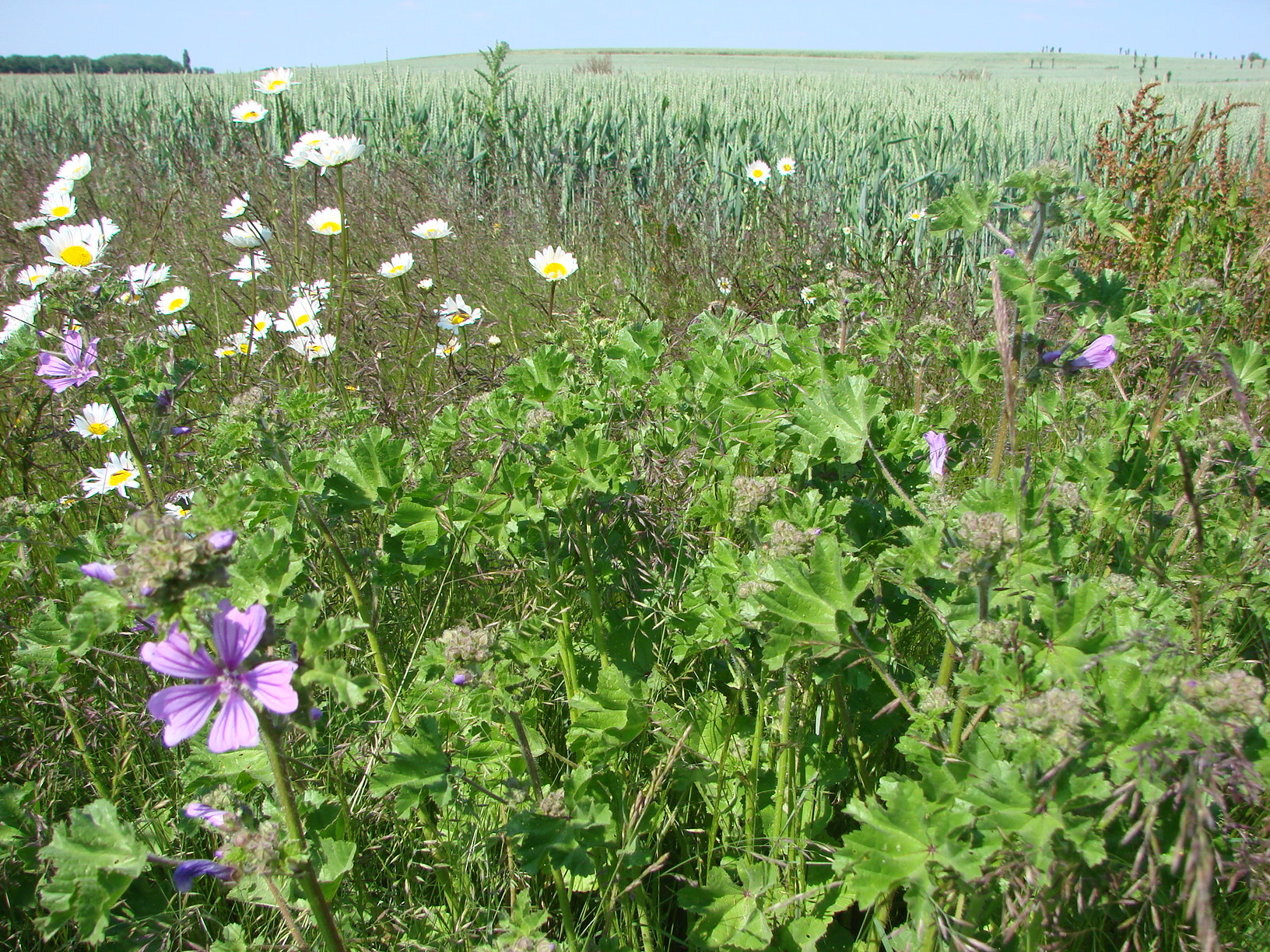
Wildflower strips at the edge of crop fields are being tested in conjunction with intercropping and living mulch to determine their impact on pests, disease and weeds. Image credit - Severin Hatt

What is unusual about this experiment is that it will try intercropping and wildflower margins alone and together, to see if together they produce synergies. It will also look at more than just insect pests. ‘Most research has focused on insects or disease or weeds, for intercropping or flower margins,’ said Dr Hatt. ‘Here we want to consider them all together.’

Insecticides will not be used on the crop strips. None of the strategies risk killing beneficial insects, or risk insecticide residues being left on the crops or getting flushed into groundwater. This is something that is viewed as increasingly important.

‘Consumers are becoming more aware of the dangers (of pesticides) for their health,’ said Prof. Borodina. ‘And people, particularly younger people, care a lot about the environment and are concerned about contamination of groundwater by persistent insecticides.’

The need to protect biodiversity is also increasingly a priority. The pheromone strategy does not kill insects but keeps pests at levels in a field where they do not cause economic harm to growers. ‘People are becoming more aware of environmental health issues,’ said Prof. Borodina.

The research in this article was funded by the EU. If you liked this article, please consider sharing it on social media.


Imprimir Artigo
Publicação Anterior

Suwanu Europe promove conferência sobre práticas sustentáveis de reutilização de água – 18 e 19 de maio

Próxima Publicação

VITIS 2020/2021 – alterações de candidaturas e pedidos de pagamento

Artigos Relacionados

Nacional

PS acusa Bolieiro de tentar "omitir extraordinário percurso" socialista

14/04/2025
Últimas

Inquérito: Atividades farmacêuticas na distribuição

06/07/2023
Nacional

Ações de Sensibilização em Agricultura e Produção Biológica AGROBIO – Associação Portuguesa de Agricultura Biológica

23/06/2023
Próxima Publicação
IFAP

VITIS 2020/2021 - alterações de candidaturas e pedidos de pagamento

Discussão sobre este post

Dossiers

  • Agricultura Biológica
  • Apoios
  • Artigos Técnicos
  • Biossoluções
  • Cadeia Alimentar
  • Fertilizantes
  • Financiamento
  • Fitofarmacêuticos
  • Florestas
  • Futuro da PAC
  • Inovação
  • Mercados e Cotações agrícolas
  • Newsletters e Revistas
  • Práticas Culturais
  • Seguros

Serviços

  • Diretório
  • Emprego
  • Máquinas Agrícolas
  • Meteorologia
  • Terrenos Agrícolas
  • Arquivo Agroportal

Empresas em Destaque

  • Syngenta Crop Protection Lda.
  • AGRO.GES – Sociedade de Estudos e Projectos, Lda.
  • CELPA -Associação da Indústria Papeleira
  • Inventa
  • BASF Portuguesa S.A.
  • Auto-Industrial, SA – Divisão Agrícola
  • Pontual – IT Business Solutions
  • CiB – Centro de Informação de Biotecnologia
  • Atlas MGA
  • CA Seguros – Companhia de Seguros de Ramos Reais, SA

Últimas entradas

  • Ceres Imaging
  • INTERAGRO
  • Ambitrevo, Soluções Agrícolas e Ambientais, Lda.
  • Ceres Imaging
  • Detail Landscaping
  • GoFigo Agrupamento de Produtores

Temas em destaque

Apicultura Arroz Azeite Batata Doce Cereais Cistusrumen Floresta Hortofruticultura Milho Produção Animal Rega Trigo Vinho

Dossiers

  • Agricultura Biológica
  • Apoios
  • Artigos Técnicos
  • Biossoluções
  • Cadeia Alimentar
  • Fertilizantes
  • Financiamento
  • Fitofarmacêuticos
  • Florestas
  • Futuro da PAC
  • Inovação
  • Mercados e Cotações agrícolas
  • Newsletters e Revistas
  • Práticas Culturais
  • Seguros

Eventos

Abril 2026
STQQSSD
   1 2 3 4 5
6 7 8 9 10 11 12
13 14 15 16 17 18 19
20 21 22 23 24 25 26
27 28 29 30    
« Mar   Mai »

Próximos eventos

Dossiers

  • Agricultura Biológica
  • Apoios
  • Artigos Técnicos
  • Biossoluções
  • Cadeia Alimentar
  • Fertilizantes
  • Financiamento
  • Fitofarmacêuticos
  • Florestas
  • Futuro da PAC
  • Inovação
  • Mercados e Cotações agrícolas
  • Newsletters e Revistas
  • Práticas Culturais
  • Seguros

Newsletter emprego

Subscrever Newsletter Emprego

Verifique na sua caixa de correio ou na pasta de spam para confirmar a sua subscrição.

Formulário

Serviços

  • Diretório
  • Emprego
  • Máquinas Agrícolas
  • Meteorologia
  • Terrenos Agrícolas
  • Arquivo Agroportal

Formulário

Sobre Nós

O Agroportal.pt é uma plataforma de informação digital que reúne a informação relevante sobre agricultura. Tem um foco na Política Agrícola Comum e a sua aplicação em Portugal.

Menu

  • Quem somos
  • Envie-nos informação
  • Anuncie connosco
  • Newsletters
  • Estatuto Editorial
  • Ficha técnica
  • Proteção de Dados Pessoais
  • Disclaimer
Facebook twitter Circle Instagram Rss Feed

© Agroportal. All Rights reserved.

  • Login
  • Registar
Sem Resultado
Ver Todos Os Resultados
  • Sugeridas
  • Notícias
  • Opinião
  • Eventos
  • Dossiers
  • Serviços
    • Diretório
    • Emprego
    • Máquinas Agrícolas
    • Meteorologia
    • Terrenos Agrícolas
    • Arquivo Agroportal

© Agroportal. All Rights reserved.

Bem-Vindo De Volta!

Sign In with Facebook
Sign In with Google
OU

Faça login na sua conta abaixo

Esqueceu-se da senha? Registar

Criar Uma Nova Conta!

Sign Up with Facebook
Sign Up with Google
OU

Preencha os campos abaixo para se registar

* Ao se registar-se no nosso site, você concorda com os Termos e Condições e a Política de Privacidade .
Todos os campos são necessários. Entrar

Obter a sua senha

Indique por favor o seu nome de utilizador ou endereço de E-mail para repor a sua senha.

Entrar
Este site usa cookies. Ao continuar a utilizar este site, está a dar consentimento à utilização de cookies. Visite a nossa Política de Protecção de dados e Cookies.