









Sem Resultado
Ver Todos Os Resultados
Newsletters
Agroportal
  • Login
  • Registar
  • Sugeridas
  • Notícias
    • Notícias
    • Nacional
    • Internacional
    • Comunicados

    EOSDA vai monitorar incêndios florestais em Portugal com dados de satélite no Programa InCubed da ESA

    APROSERPA recebida na CCDR Alentejo com abertura total para defender os produtores de Serpa

    Três projectos portugueses de investigação aplicada são finalistas da 3ª edição dos Innovation Awards Roullier

    Polinizadores em Ação – Plano de Ação para a Conservação e Sustentabilidade dos Polinizadores em Portugal

    COM-PACTO promove agricultura local em feiras regionais

    O COM-PACTO chegou às escolas do Norte de Portugal com a atividade “PACO em Ação”

    Quercus condena “vazio legal” que permitiu destruir pinhal de elevado valor ecológico às portas da Lagoa de Albufeira

    Alunos da ESPS desenvolvem projeto Wetlands sobre o Rio Sor

    Projeto TomAC comprova ganhos de sustentabilidade e produtividade da Agricultura de Conservação em tomate para indústria

  • Opinião

    A Grande Ilusão: Porque têm as nossas Confederações medo da rua?

    É urgente a recuperação dos ecossistemas para travar o declínio dos polinizadores

    Foi entre 2011 e 2016, em anos da Troika, que as explorações agrícolas portuguesas tiveram o melhor desempenho económico das ultimas três décadas

    António Covas

    Transição digital, inteligência territorial e incumbentes principais

    De olhos postos na agricultura do futuro

    João Dinis

    Secretaria de Estado da Agricultura afinal está em coma induzido…

    Manuel Cardoso

    Agricultura e manifs

    O poder de compra médio dos Agricultores Portugueses caiu em 2022 cerca de 25%

    Manuel Chaveiro Soares

    Importa ultrapassar o envelhecimento demográfico em Portugal

  • Eventos
  • Dossiers

    Dossiers I

    • Agricultura Biológica
    • Apoios
    • Artigos Técnicos
    • Biossoluções
    • Cadeia Alimentar
    • Fertilizantes
    • Financiamento
    • Fitofarmacêuticos

    Dossiers II

    • Florestas
    • Futuro da PAC
    • Inovação
    • Mercados
    • Newsletters e Revistas
    • Práticas Culturais
    • Seguros

    Últimas

    Comissão Europeia pt

    Comissão aprova regime português de auxílios estatais no valor de 250 milhões de euros para apoiar o setor florestal

    30/03/2026

    Federação Agrícola dos Açores envia carta ao Governo a defender igualdade de apoios

    27/03/2026

    Carvalho lituano de Laukiai vence concurso árvore europeia do ano 2026

    26/03/2026

    Paulo do Nascimento Cabral saúda introdução de salvaguardas no Acordo tarifário entre a UE e os EUA

    26/03/2026

    Dia Internacional das Florestas: um convite para descobrir o pinheiro-bravo

    26/03/2026

    Navigator apoia produtores florestais afetados pela Kristin com soluções de financiamento e oferta de plantas

    26/03/2026
  • Serviços
    • Diretório
    • Emprego
    • Máquinas Agrícolas
    • Meteorologia
    • Terrenos Agrícolas
    • Arquivo Agroportal
Agroportal
  • Sugeridas
  • Notícias
    • Notícias
    • Nacional
    • Internacional
    • Comunicados

    EOSDA vai monitorar incêndios florestais em Portugal com dados de satélite no Programa InCubed da ESA

    APROSERPA recebida na CCDR Alentejo com abertura total para defender os produtores de Serpa

    Três projectos portugueses de investigação aplicada são finalistas da 3ª edição dos Innovation Awards Roullier

    Polinizadores em Ação – Plano de Ação para a Conservação e Sustentabilidade dos Polinizadores em Portugal

    COM-PACTO promove agricultura local em feiras regionais

    O COM-PACTO chegou às escolas do Norte de Portugal com a atividade “PACO em Ação”

    Quercus condena “vazio legal” que permitiu destruir pinhal de elevado valor ecológico às portas da Lagoa de Albufeira

    Alunos da ESPS desenvolvem projeto Wetlands sobre o Rio Sor

    Projeto TomAC comprova ganhos de sustentabilidade e produtividade da Agricultura de Conservação em tomate para indústria

  • Opinião

    A Grande Ilusão: Porque têm as nossas Confederações medo da rua?

    É urgente a recuperação dos ecossistemas para travar o declínio dos polinizadores

    Foi entre 2011 e 2016, em anos da Troika, que as explorações agrícolas portuguesas tiveram o melhor desempenho económico das ultimas três décadas

    António Covas

    Transição digital, inteligência territorial e incumbentes principais

    De olhos postos na agricultura do futuro

    João Dinis

    Secretaria de Estado da Agricultura afinal está em coma induzido…

    Manuel Cardoso

    Agricultura e manifs

    O poder de compra médio dos Agricultores Portugueses caiu em 2022 cerca de 25%

    Manuel Chaveiro Soares

    Importa ultrapassar o envelhecimento demográfico em Portugal

  • Eventos
  • Dossiers

    Dossiers I

    • Agricultura Biológica
    • Apoios
    • Artigos Técnicos
    • Biossoluções
    • Cadeia Alimentar
    • Fertilizantes
    • Financiamento
    • Fitofarmacêuticos

    Dossiers II

    • Florestas
    • Futuro da PAC
    • Inovação
    • Mercados
    • Newsletters e Revistas
    • Práticas Culturais
    • Seguros

    Últimas

    Comissão Europeia pt

    Comissão aprova regime português de auxílios estatais no valor de 250 milhões de euros para apoiar o setor florestal

    30/03/2026

    Federação Agrícola dos Açores envia carta ao Governo a defender igualdade de apoios

    27/03/2026

    Carvalho lituano de Laukiai vence concurso árvore europeia do ano 2026

    26/03/2026

    Paulo do Nascimento Cabral saúda introdução de salvaguardas no Acordo tarifário entre a UE e os EUA

    26/03/2026

    Dia Internacional das Florestas: um convite para descobrir o pinheiro-bravo

    26/03/2026

    Navigator apoia produtores florestais afetados pela Kristin com soluções de financiamento e oferta de plantas

    26/03/2026
  • Serviços
    • Diretório
    • Emprego
    • Máquinas Agrícolas
    • Meteorologia
    • Terrenos Agrícolas
    • Arquivo Agroportal
Sem Resultado
Ver Todos Os Resultados
Agroportal
tomate

Dissecting two decades of Good Agricultural Practices

por Agroportal
01-08-2019 | 15:06
em Internacional
Tempo De Leitura: 9 mins
A A
0
VISITAS
Partilhe no FacebookPartilhe no TwitterEnviar para o WhatsappEnviar para o TelegramEnviar para o LinkedIn

[Fonte: AGDAILY] Every fruit and vegetable grower spends time training their farm laborers. Usually they talk about how to harvest a crop, when and how much the pay will be, and what the general expectations for production are.

And how to use the restroom in the most sanitary way possible.

Admittedly, that last one is probably a little more difficult for a farmer to broach with a worker. It’s a sensitive subject, but knowing as much as we do today about pathogens and transmission, the topic of properly washing one’s hands and avoiding cross contamination is vitally important. And leaders with groups such as the National Good Agricultural Practices (GAPs) Program have been helping farmers understand and implement food safety efforts for the past 20 years.

The National GAPs Program was founded in 1999, just one year after the FDA released its groundbreaking guidance document on produce food safety called the Guide to Minimize Microbial Food Safety Hazards for Fresh Fruits and Vegetables. The National GAPs Program, based out of Cornell University, has been an integral part of the adoption of American food safety practices, bringing awareness, education, resource materials, and the occasional tricky conversation about what people are doing in the restroom to our farming operations.

The FDA’s Guide “was the document that got it started,” said Elizabeth Bihn, director of the National GAPs Program. “What that document did that has really stood the test of time was making food safety in fruit and vegetable production a priority and something that had to be looked at and taken seriously.”

The acceptance and usage of new food safety guidelines certainly didn’t happen overnight, and in agriculture, like in many industries, there were many questions and some pushback over them. Change can be difficult, and while a grower may claim that he or she has been farming the same way for 30 or 40 years, that’s not usually true. New varieties, tilling practices, sprays, equipment, and so much else evolves in agriculture, albeit slowly at times.

In the late ‘90s and early ’00, the approach to food safety was poised to change, too.

The early days

Prior to 1998, there was very little in guidance documents and federal rules that put an emphasis on food safety for fruits and vegetables. In fact, a related document on manufacturing practices made only a passing reference to such safety, and instead noted that fresh fruits and vegetables were exempt from oversight.

With the 1998 document came programs like Bihn’s that worked to deepen the national focus on food safety — it was finally elevated to the federal level, to an extent legitimizing it as a necessary discussion point about agriculture moving forward.

“We have to consider microbial risks associated in the production of fruits and vegetables as a food safety risk,” she said. “What I think of the 1998 document doing is that it really outlined the case that there were risks associated with production, that these risks were resulting in illness, and that we should start thinking about where they come from, how do we control them, and what should be considered.”

Especially in those early years, it was the industry that impacted the adoption of GAPs — which had been voluntary — into more regular use. The companies that were doing the food-buying set the expectations and began sending letters to growers urging them to implement GAPs.
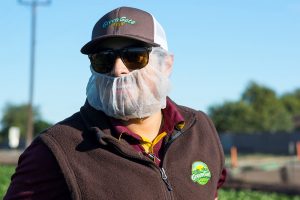
A farm worker with GreenGate Fresh

But there were hurdles that made the process difficult for farmers: While changes in technology or sprays or countless other aspects of farming often positively impact a grower’s bottom line, implementing these measures in the name of food safety appeared to have notable costs associated with them. And even though the buyers strongly sought GAPs implementation, growers weren’t being paid more money for their products if they chose that route.

Additionally, the pressure from food buyers to require GAPs changed from year to year. Sure, there was a preference to get fruit and vegetables from farmers using GAPs, but what if no such farm had food available. Buyers didn’t let their shelves remain empty, so they would buy from non-GAPs farms. The requirements were inconsistent, and farmers early on were left wondering how important these measures really were.

“Most growers would tell you: ‘I eat this stuff myself. I feed it to my family. Why would I not use the best practices,’” Bihn said.

But then 2006 arrived. That was the year that organic spinach from a farm in California became contaminated with E. coli O157:H7. The bacteria was discovered in bagged spinach in a majority of U.S. states, ultimately making 276 people ill and killing three.

As far as food safety events go, it was “a big one.” And food safety was catapulted to the forefront of American concern.

Putting a focus into function

Yet despite the increased awareness that was being put on food safety issues in the fruits and vegetables sector, coupled with multi-state Salmonella outbreaks in products such as tomatoes, cantaloupes, and peanut butter in the years that followed, there remains to this day much boots-on-the-ground work to be done to help producers understand the role that GAPs plays in the agricultural industry.

“One of the biggest things that has happened, and that is still happening, is that I talk with farmers who have never heard of Good Agricultural Practices,” Bihn said. “They’ve thought about food safety, but they don’t really understand how it impacts them.”

Bihn said that a majority of universities that are teaching horticulture don’t have food safety classes in the course catalog. At Cornell, for example, she recommends that horticulture students go to the food science department and take a food safety class there.

The National GAPs Program had long been funded through competitive grants, and state and federal governments are putting research money into this topic.

“It’s a collaboration of everyone focusing on it,” Bihn said, showing that there’s no one central hub controlling the direction or destiny of GAPs but rather that there are extension agents, researchers, non-governmental groups, the CDC, FDA, and USDA, and many others who are all playing their part and contributing to the progression forward.

“You have to get everyone involved, because the problem is complex and requires many different areas of expertise to keep things moving forward,” she said.

The challenge of today is making sure that growers understand what’s expected and that GAPs leaders impart the best and most usable advice based on foundational science. And make no mistake, that can be challenging, despite everything we know about food contaminants.

“You have to get everyone involved, because the problem is complex and requires many different areas of expertise to keep things moving forward.”

Bihn recounts an exchange she had with a farm operator: “One grower told me, ‘You’re going to be the straw that breaks the camel’s back. I’m already dealing with weather, pests, market prices. And now I’ve got to focus on this food safety stuff. You’ve got to be kidding me.’”

She noted that educators can’t talk to farmers like food safety is only thing that’s important, because it’s not the only thing that’s important to the ag community.

“If you can’t stop long enough to listen to them tell you that this is what I need help with, or this is how this is going to integrate into my production practices, into my pest management practices, into my farm management practices, into my economic possibilities, then you’re not going to be impactful,” she said.

The path forward

No grower wants to sell or consume something that’s contaminated. So Bihn relishes the positive feedback that she does get. She’ll hear from growers today who say, “I get better contracts, where people pay me on time and they don’t try to say they didn’t take the load,” or, simply, “It’s the right thing to do.”

GAPs is set up in a way that it can be put into place by any grower, no matter the size of the operation. There are audits to ensure compliance with the guidelines, and numerous resources, including an extensive searchable GAPs research database and focus-grouped educational materials, are readily accessible.

Bihn is also weighing broader applications of the GAPs tenets, including whether they could be applicable to the commodity sectors of agriculture. While GAPs aren’t pertinent to crops that undergo a heat treatment or that are put into a non-food product such as ethanol, how about something like wheat?

“The outbreaks that have been related to wheat and flour being contaminated, those have made me think more about agronomic-type farmers,” Bihn said. “It’s not entirely clear where the contamination is coming from.” In contamination of raw cookie dough, for example, she said it may not be as simple as blaming raw eggs — now it could be the flour.

Now there are federal regulations governing the production of fruits and vegetables through the Food Safety Modernization Act’s Produce Safety Rule that join well established industry programs such as those for leafy greens, tomatoes, cantaloupes, and strawberries — all of these are efforts to improve food safety, a movement that was initiated with the 1998 guide.

“When I look at the evolution from 20 years ago,” Bihn said, “much progress has been made, but there is still a lot to be done. We need to invest in research to better understand the challenges on the farm, support growers as they put practices in place, and in some cases, we still need to convince people that food safety is an issue.”

Imprimir Artigo
Publicação Anterior

ISA participa em consórcio universitário para o desenvolvimento agrário e reforço da investigação nas regiões tropicais.

Próxima Publicação

Novos psicólogos prometidos para as escolas em 2018 só vão ser colocados em setembro

Artigos Relacionados

Últimas

Organic production: Targeted updates and simplification

30/03/2026
Copa Cogeca
Últimas

Bad streak continues for European agriculture: Commission grants new tariff concessions to Australia in sensitive sectors

24/03/2026
Últimas

The food commodities driving deforestation globally

24/03/2026
Próxima Publicação

Novos psicólogos prometidos para as escolas em 2018 só vão ser colocados em setembro

Discussão sobre este post

Dossiers

  • Agricultura Biológica
  • Apoios
  • Artigos Técnicos
  • Biossoluções
  • Cadeia Alimentar
  • Fertilizantes
  • Financiamento
  • Fitofarmacêuticos
  • Florestas
  • Futuro da PAC
  • Inovação
  • Mercados e Cotações agrícolas
  • Newsletters e Revistas
  • Práticas Culturais
  • Seguros

Serviços

  • Diretório
  • Emprego
  • Máquinas Agrícolas
  • Meteorologia
  • Terrenos Agrícolas
  • Arquivo Agroportal

Empresas em Destaque

  • CELPA -Associação da Indústria Papeleira
  • Clube de Produtores Continente
  • HAIFA IBERIA
  • Anipla – Associação Nacional da Indústria para a Proteção das Plantas
  • CA Seguros – Companhia de Seguros de Ramos Reais, SA
  • BASF Portuguesa S.A.
  • Corteva
  • Auto-Industrial, SA – Divisão Agrícola
  • Pontual – IT Business Solutions
  • CiB – Centro de Informação de Biotecnologia

Últimas entradas

  • Ceres Imaging
  • INTERAGRO
  • Ambitrevo, Soluções Agrícolas e Ambientais, Lda.
  • Ceres Imaging
  • Detail Landscaping
  • GoFigo Agrupamento de Produtores

Temas em destaque

Apicultura Arroz Azeite Batata Doce Cereais Cistusrumen Floresta Hortofruticultura Milho Produção Animal Rega Trigo Vinho

Dossiers

  • Agricultura Biológica
  • Apoios
  • Artigos Técnicos
  • Biossoluções
  • Cadeia Alimentar
  • Fertilizantes
  • Financiamento
  • Fitofarmacêuticos
  • Florestas
  • Futuro da PAC
  • Inovação
  • Mercados e Cotações agrícolas
  • Newsletters e Revistas
  • Práticas Culturais
  • Seguros

Eventos

Maio 2026
STQQSSD
     1 2 3
4 5 6 7 8 9 10
11 12 13 14 15 16 17
18 19 20 21 22 23 24
25 26 27 28 29 30 31
« Abr   Jun »

Próximos eventos

Dossiers

  • Agricultura Biológica
  • Apoios
  • Artigos Técnicos
  • Biossoluções
  • Cadeia Alimentar
  • Fertilizantes
  • Financiamento
  • Fitofarmacêuticos
  • Florestas
  • Futuro da PAC
  • Inovação
  • Mercados e Cotações agrícolas
  • Newsletters e Revistas
  • Práticas Culturais
  • Seguros

Newsletter emprego

Subscrever Newsletter Emprego

Verifique na sua caixa de correio ou na pasta de spam para confirmar a sua subscrição.

Formulário

Serviços

  • Diretório
  • Emprego
  • Máquinas Agrícolas
  • Meteorologia
  • Terrenos Agrícolas
  • Arquivo Agroportal

Formulário

Sobre Nós

O Agroportal.pt é uma plataforma de informação digital que reúne a informação relevante sobre agricultura. Tem um foco na Política Agrícola Comum e a sua aplicação em Portugal.

Menu

  • Quem somos
  • Envie-nos informação
  • Anuncie connosco
  • Newsletters
  • Estatuto Editorial
  • Ficha técnica
  • Proteção de Dados Pessoais
  • Disclaimer
Facebook twitter Circle Instagram Rss Feed

© Agroportal. All Rights reserved.

  • Login
  • Registar
Sem Resultado
Ver Todos Os Resultados
  • Sugeridas
  • Notícias
  • Opinião
  • Eventos
  • Dossiers
  • Serviços
    • Diretório
    • Emprego
    • Máquinas Agrícolas
    • Meteorologia
    • Terrenos Agrícolas
    • Arquivo Agroportal

© Agroportal. All Rights reserved.

Bem-Vindo De Volta!

Sign In with Facebook
Sign In with Google
OU

Faça login na sua conta abaixo

Esqueceu-se da senha? Registar

Criar Uma Nova Conta!

Sign Up with Facebook
Sign Up with Google
OU

Preencha os campos abaixo para se registar

* Ao se registar-se no nosso site, você concorda com os Termos e Condições e a Política de Privacidade .
Todos os campos são necessários. Entrar

Obter a sua senha

Indique por favor o seu nome de utilizador ou endereço de E-mail para repor a sua senha.

Entrar
Este site usa cookies. Ao continuar a utilizar este site, está a dar consentimento à utilização de cookies. Visite a nossa Política de Protecção de dados e Cookies.