









Sem Resultado
Ver Todos Os Resultados
Newsletters
Agroportal
  • Login
  • Registar
  • Sugeridas
  • Notícias
    • Notícias
    • Nacional
    • Internacional
    • Comunicados

    EOSDA vai monitorar incêndios florestais em Portugal com dados de satélite no Programa InCubed da ESA

    APROSERPA recebida na CCDR Alentejo com abertura total para defender os produtores de Serpa

    Três projectos portugueses de investigação aplicada são finalistas da 3ª edição dos Innovation Awards Roullier

    Polinizadores em Ação – Plano de Ação para a Conservação e Sustentabilidade dos Polinizadores em Portugal

    COM-PACTO promove agricultura local em feiras regionais

    O COM-PACTO chegou às escolas do Norte de Portugal com a atividade “PACO em Ação”

    Quercus condena “vazio legal” que permitiu destruir pinhal de elevado valor ecológico às portas da Lagoa de Albufeira

    Alunos da ESPS desenvolvem projeto Wetlands sobre o Rio Sor

    Projeto TomAC comprova ganhos de sustentabilidade e produtividade da Agricultura de Conservação em tomate para indústria

  • Opinião

    A Grande Ilusão: Porque têm as nossas Confederações medo da rua?

    É urgente a recuperação dos ecossistemas para travar o declínio dos polinizadores

    Foi entre 2011 e 2016, em anos da Troika, que as explorações agrícolas portuguesas tiveram o melhor desempenho económico das ultimas três décadas

    António Covas

    Transição digital, inteligência territorial e incumbentes principais

    De olhos postos na agricultura do futuro

    João Dinis

    Secretaria de Estado da Agricultura afinal está em coma induzido…

    Manuel Cardoso

    Agricultura e manifs

    O poder de compra médio dos Agricultores Portugueses caiu em 2022 cerca de 25%

    Manuel Chaveiro Soares

    Importa ultrapassar o envelhecimento demográfico em Portugal

  • Eventos
  • Dossiers

    Dossiers I

    • Agricultura Biológica
    • Apoios
    • Artigos Técnicos
    • Biossoluções
    • Cadeia Alimentar
    • Fertilizantes
    • Financiamento
    • Fitofarmacêuticos

    Dossiers II

    • Florestas
    • Futuro da PAC
    • Inovação
    • Mercados
    • Newsletters e Revistas
    • Práticas Culturais
    • Seguros

    Últimas

    Comissão Europeia pt

    Comissão aprova regime português de auxílios estatais no valor de 250 milhões de euros para apoiar o setor florestal

    30/03/2026

    Federação Agrícola dos Açores envia carta ao Governo a defender igualdade de apoios

    27/03/2026

    Carvalho lituano de Laukiai vence concurso árvore europeia do ano 2026

    26/03/2026

    Paulo do Nascimento Cabral saúda introdução de salvaguardas no Acordo tarifário entre a UE e os EUA

    26/03/2026

    Dia Internacional das Florestas: um convite para descobrir o pinheiro-bravo

    26/03/2026

    Navigator apoia produtores florestais afetados pela Kristin com soluções de financiamento e oferta de plantas

    26/03/2026
  • Serviços
    • Diretório
    • Emprego
    • Máquinas Agrícolas
    • Meteorologia
    • Terrenos Agrícolas
    • Arquivo Agroportal
Agroportal
  • Sugeridas
  • Notícias
    • Notícias
    • Nacional
    • Internacional
    • Comunicados

    EOSDA vai monitorar incêndios florestais em Portugal com dados de satélite no Programa InCubed da ESA

    APROSERPA recebida na CCDR Alentejo com abertura total para defender os produtores de Serpa

    Três projectos portugueses de investigação aplicada são finalistas da 3ª edição dos Innovation Awards Roullier

    Polinizadores em Ação – Plano de Ação para a Conservação e Sustentabilidade dos Polinizadores em Portugal

    COM-PACTO promove agricultura local em feiras regionais

    O COM-PACTO chegou às escolas do Norte de Portugal com a atividade “PACO em Ação”

    Quercus condena “vazio legal” que permitiu destruir pinhal de elevado valor ecológico às portas da Lagoa de Albufeira

    Alunos da ESPS desenvolvem projeto Wetlands sobre o Rio Sor

    Projeto TomAC comprova ganhos de sustentabilidade e produtividade da Agricultura de Conservação em tomate para indústria

  • Opinião

    A Grande Ilusão: Porque têm as nossas Confederações medo da rua?

    É urgente a recuperação dos ecossistemas para travar o declínio dos polinizadores

    Foi entre 2011 e 2016, em anos da Troika, que as explorações agrícolas portuguesas tiveram o melhor desempenho económico das ultimas três décadas

    António Covas

    Transição digital, inteligência territorial e incumbentes principais

    De olhos postos na agricultura do futuro

    João Dinis

    Secretaria de Estado da Agricultura afinal está em coma induzido…

    Manuel Cardoso

    Agricultura e manifs

    O poder de compra médio dos Agricultores Portugueses caiu em 2022 cerca de 25%

    Manuel Chaveiro Soares

    Importa ultrapassar o envelhecimento demográfico em Portugal

  • Eventos
  • Dossiers

    Dossiers I

    • Agricultura Biológica
    • Apoios
    • Artigos Técnicos
    • Biossoluções
    • Cadeia Alimentar
    • Fertilizantes
    • Financiamento
    • Fitofarmacêuticos

    Dossiers II

    • Florestas
    • Futuro da PAC
    • Inovação
    • Mercados
    • Newsletters e Revistas
    • Práticas Culturais
    • Seguros

    Últimas

    Comissão Europeia pt

    Comissão aprova regime português de auxílios estatais no valor de 250 milhões de euros para apoiar o setor florestal

    30/03/2026

    Federação Agrícola dos Açores envia carta ao Governo a defender igualdade de apoios

    27/03/2026

    Carvalho lituano de Laukiai vence concurso árvore europeia do ano 2026

    26/03/2026

    Paulo do Nascimento Cabral saúda introdução de salvaguardas no Acordo tarifário entre a UE e os EUA

    26/03/2026

    Dia Internacional das Florestas: um convite para descobrir o pinheiro-bravo

    26/03/2026

    Navigator apoia produtores florestais afetados pela Kristin com soluções de financiamento e oferta de plantas

    26/03/2026
  • Serviços
    • Diretório
    • Emprego
    • Máquinas Agrícolas
    • Meteorologia
    • Terrenos Agrícolas
    • Arquivo Agroportal
Sem Resultado
Ver Todos Os Resultados
Agroportal
Copa Cogeca

Opinion Piece – The Commission’s first response to the crisis on the fertiliser market lacks concrete short-term actions

por Agroportal
07-04-2022 | 19:05
em Últimas, Internacional
Tempo De Leitura: 5 mins
A A
0
VISITAS
Partilhe no FacebookPartilhe no TwitterEnviar para o WhatsappEnviar para o TelegramEnviar para o LinkedIn

The Russian invasion of Ukraine has disrupted many markets and value chains globally. Besides the energy and agricultural commodities that have been widely analysed and commented on, there is another market where the war is highly impacting European agriculture, namely fertilisers.

Crises in the fertiliser market differ in their nature but their effects are cumulative for farmers

Fertilisers are a major input in crop production, especially in cereals, oilseeds, and protein crops where they used to account for 17% of overall turnover and 42% of specific costs. This was true until 2021, when a first crisis took place: a demand shock in the wake of the global post- pandemic recovery. In this respect, the EU wholesale price for nitrogen solution has seen a 250% rise from January 2021 to February 2022. Despite the troubled market, EU growers have been able to source most of the fertilisers needed for this cropping season. However, the extra price we had to pay was not offset by the moderate grain price increase experienced since mid- 2021. All my European colleagues are now concerned as their income for the crop year 2022 is likely to shrink dramatically.
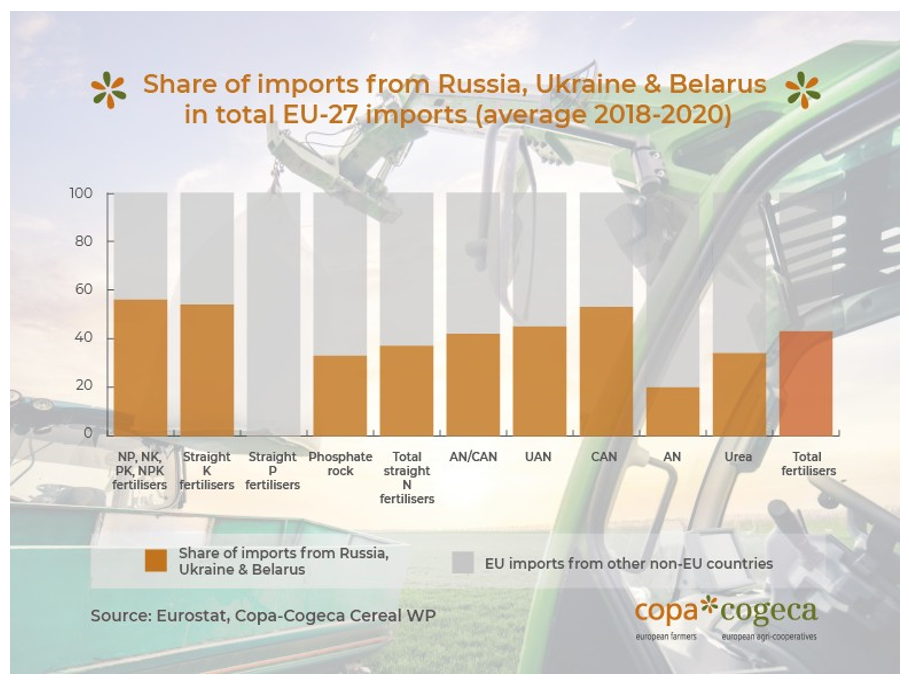
Since the Russian invasion on 24 February, fertiliser markets are witnessing a new crisis, in the form of a supply shock this time. Russia, B elarus, and Ukraine have stopped exporting fertilisers. As the EU is dependent on fertiliser imports and the three countries together account for 43% of our fertiliser imports, prices have made another jump to unprecedented levels, far above the already high pre-war prices. The price for nitrogen solution is now 370% above the level of January 2021. The worst is yet to come as supply shortages are expected in the coming season starting in May. Insufficient fertilisation will mean a loss of yield for the upcoming harvest.
A European response that provides few short-term solutions

Since 24 February, European authorities have been quite proactive when it comes to the crisis affecting the energy and grain market. On 8 March, the European Commission published the REPowerEU plan addressing the oil, gas and electricity markets and proposing short term as well as long term measures. Similarly on 23 March, the Commission issued its Communication on food security, involving both long term and immediate measures designed to increase EU food production and support livestock and arable farmers impacted by high input prices.

So far however, Europe has fallen short of addressing the surge in EU fertiliser prices and the risk of fertiliser shortages, which essentially concern urea, nitrogen solutions, phosphates, and potash. Apart from long term objectives to reduce the EU dependence on imported gas and fertilisers and direct aid to farmers and the fertiliser industry in the short term, the European Commission’s communication does not address the ongoing structural imbalances in the fertiliser market. The EU farming community has been calling for years now for a change. Immediate EU political solutions exist that could be put in place to ease the pressure on EU fertiliser markets.

Nitrogen: while the EU is self-sufficient in ammonium nitrate, imports into the EU account for 36% of urea consumption and 30% for nitrogen solution. Moreover 34% of urea imports used to come from Russia, Belarus, and Ukraine, while the share was 45% for nitrogen solution, leading to a high risk of shortages in the months to come. The EU nitrogen market is protected by 6.5% import duties, aggravated by specific anti-dumping taxes affecting nitrogen solution from two of the major global exporters, Trinidad and Tobago and the USA. As a result, providers have a clear incentive to supply other markets rather than Europe. To prevent shortages, the EU urgently needs to suspend import and anti-dumping duties on urea and nitrogen solutions. Other short term complementary measures should include securing product flows from neighbouring exporters (notably urea from Egypt and Algeria), granting flexibility on REACH related import documents, and promoting the use of fertilisers supplemented with urease and nitrification inhibitors that enhance efficiency, allowing farmers to use 15% less nitrogen on average.

Phosphates and potash: imports account for the bulk of the EU consumption for phosphate rock and potash, and 33% of phosphate rock imports used to come from Russia, Belarus, and Ukraine, while the share was 54% for potash. This also leads to a high risk of supply shortage in the season 2022-2023. Given EU imports are duty-free, urgent actions include securing supply from alternative exporters (Morocco, Algeria, Egypt, Israel, Senegal, and South Africa for phosphates; Canada, Israel and Chile for potash), as well as delaying the implementation of the European Fertiliser Marketing Regulation that would prevent access or generate higher costs for accessing Northern African phosphates compared to other users such as Brazil.

Organic fertilisers: Farmers do not only use mineral fertilisers, but they also produce and use organic fertilisers, such as straw, manure and digestate from biogas plants. The Nitrates Directive sets limits for nitrogen from manure that can be applied annually at 170 kg/ha that leads to an unjustified distinction between organic matter from livestock manure and other organic sources.

Reducing dependence on fertiliser imports: a shared medium-term objective

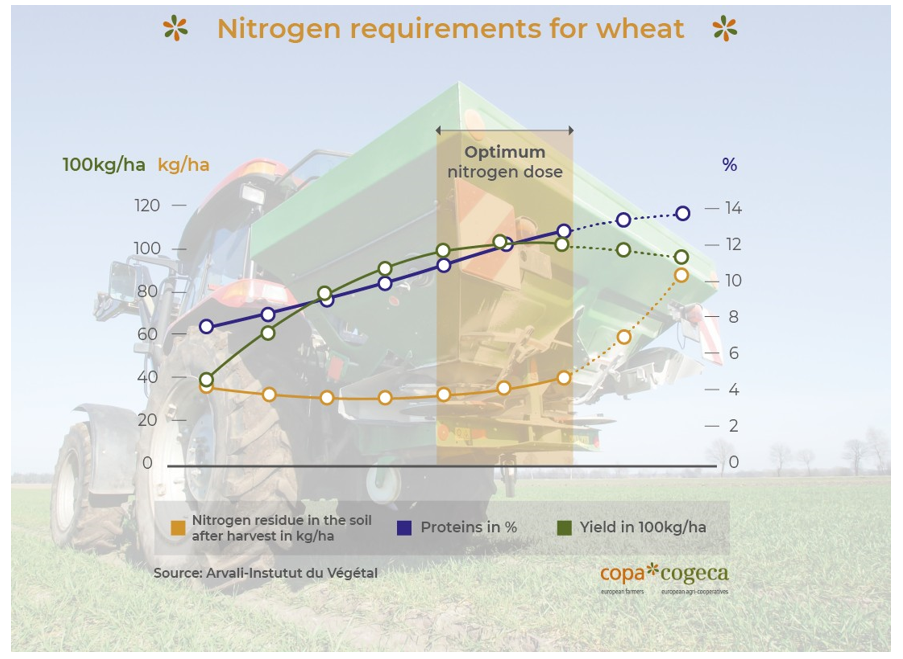
In the medium term, Europe should of course work to curb its reliance on fertiliser imports, as rightly mentioned in the Commission Communication of 23 March. Measures aiming both at decreasing consumption and developing European fertiliser sources exist but will take time to be established. We agree with the European Commission that limiting nitrogen needs should be achieved by widely developing precision farming technology while using more efficient plant varieties and legumes (and perhaps other crops in the future) that can perform symbiotic nitrogen fixation from the air.

On the supply side, Europe should speed up the development of mineral nitrogen fertilisers produced from local green hydrogen, as well as enhanced nutrient recycling from local organic sources (livestock manure, biochar, wastes…).

Certain regions also have organic matter surpluses while others are in shortfall. It is essential to provide further incentives to support investments in the recycling of nutrients in organic matter and manure and break down administrative barriers to facilitate supplies of organic matter from regions with surpluses to those with deficits in the EU. For example, when the digestates are altered in any way such as composting or liquid-solid separation, they are again considered as waste and not as a component material of fertilising product falling in the scope of the EU Fertiliser Product Regulation, which runs counter to a proper management of this type of material and to the circular economy.

Building a long-term European fertiliser policy will is key step to limit our reliance on imported farm inputs, increase food chain resilience and improve global food security. However, decision makers must also address short term threats and take immediate, emergency action to facilitate fertiliser imports and avoid predictable shortages of this critical input in the months to come.

Tim Cullinan

IFA President, Copa 1st Vice President, Pig farmer from Tipperary (IE).

Artigo publicado originalmente em Copa Cogeca.

Imprimir Artigo
Publicação Anterior

«Batata-doce da Madeira» – Denominação de Origem Protegida – Nova Consulta Pública

Próxima Publicação

Governo não fez “tudo o que podia” para resolver exploração de imigrantes – CNA

Artigos Relacionados

Últimas

EOSDA vai monitorar incêndios florestais em Portugal com dados de satélite no Programa InCubed da ESA

01/04/2026
Últimas

Número recorde de incêndios florestais em 2025 apela a uma ação mais forte da União Europeia

31/03/2026
Últimas

APROSERPA recebida na CCDR Alentejo com abertura total para defender os produtores de Serpa

31/03/2026
Próxima Publicação

Governo não fez “tudo o que podia” para resolver exploração de imigrantes - CNA

Discussão sobre este post

Dossiers

  • Agricultura Biológica
  • Apoios
  • Artigos Técnicos
  • Biossoluções
  • Cadeia Alimentar
  • Fertilizantes
  • Financiamento
  • Fitofarmacêuticos
  • Florestas
  • Futuro da PAC
  • Inovação
  • Mercados e Cotações agrícolas
  • Newsletters e Revistas
  • Práticas Culturais
  • Seguros

Serviços

  • Diretório
  • Emprego
  • Máquinas Agrícolas
  • Meteorologia
  • Terrenos Agrícolas
  • Arquivo Agroportal

Empresas em Destaque

  • CELPA -Associação da Indústria Papeleira
  • Inventa
  • NOP – New Organic Planet, LDA
  • Abreu Advogados
  • Atlas MGA
  • Portugal Fresh – Associação para a Promoção das Frutas, Legumes e Flores de Portugal
  • AGRO.GES – Sociedade de Estudos e Projectos, Lda.
  • BASF Portuguesa S.A.
  • Auto-Industrial, SA – Divisão Agrícola
  • Anipla – Associação Nacional da Indústria para a Proteção das Plantas

Últimas entradas

  • Ceres Imaging
  • INTERAGRO
  • Ambitrevo, Soluções Agrícolas e Ambientais, Lda.
  • Ceres Imaging
  • Detail Landscaping
  • GoFigo Agrupamento de Produtores

Temas em destaque

Apicultura Arroz Azeite Batata Doce Cereais Cistusrumen Floresta Hortofruticultura Milho Produção Animal Rega Trigo Vinho

Dossiers

  • Agricultura Biológica
  • Apoios
  • Artigos Técnicos
  • Biossoluções
  • Cadeia Alimentar
  • Fertilizantes
  • Financiamento
  • Fitofarmacêuticos
  • Florestas
  • Futuro da PAC
  • Inovação
  • Mercados e Cotações agrícolas
  • Newsletters e Revistas
  • Práticas Culturais
  • Seguros

Eventos

Maio 2026
STQQSSD
     1 2 3
4 5 6 7 8 9 10
11 12 13 14 15 16 17
18 19 20 21 22 23 24
25 26 27 28 29 30 31
« Abr   Jun »

Próximos eventos

Dossiers

  • Agricultura Biológica
  • Apoios
  • Artigos Técnicos
  • Biossoluções
  • Cadeia Alimentar
  • Fertilizantes
  • Financiamento
  • Fitofarmacêuticos
  • Florestas
  • Futuro da PAC
  • Inovação
  • Mercados e Cotações agrícolas
  • Newsletters e Revistas
  • Práticas Culturais
  • Seguros

Newsletter emprego

Subscrever Newsletter Emprego

Verifique na sua caixa de correio ou na pasta de spam para confirmar a sua subscrição.

Formulário

Serviços

  • Diretório
  • Emprego
  • Máquinas Agrícolas
  • Meteorologia
  • Terrenos Agrícolas
  • Arquivo Agroportal

Formulário

Sobre Nós

O Agroportal.pt é uma plataforma de informação digital que reúne a informação relevante sobre agricultura. Tem um foco na Política Agrícola Comum e a sua aplicação em Portugal.

Menu

  • Quem somos
  • Envie-nos informação
  • Anuncie connosco
  • Newsletters
  • Estatuto Editorial
  • Ficha técnica
  • Proteção de Dados Pessoais
  • Disclaimer
Facebook twitter Circle Instagram Rss Feed

© Agroportal. All Rights reserved.

  • Login
  • Registar
Sem Resultado
Ver Todos Os Resultados
  • Sugeridas
  • Notícias
  • Opinião
  • Eventos
  • Dossiers
  • Serviços
    • Diretório
    • Emprego
    • Máquinas Agrícolas
    • Meteorologia
    • Terrenos Agrícolas
    • Arquivo Agroportal

© Agroportal. All Rights reserved.

Bem-Vindo De Volta!

Sign In with Facebook
Sign In with Google
OU

Faça login na sua conta abaixo

Esqueceu-se da senha? Registar

Criar Uma Nova Conta!

Sign Up with Facebook
Sign Up with Google
OU

Preencha os campos abaixo para se registar

* Ao se registar-se no nosso site, você concorda com os Termos e Condições e a Política de Privacidade .
Todos os campos são necessários. Entrar

Obter a sua senha

Indique por favor o seu nome de utilizador ou endereço de E-mail para repor a sua senha.

Entrar
Este site usa cookies. Ao continuar a utilizar este site, está a dar consentimento à utilização de cookies. Visite a nossa Política de Protecção de dados e Cookies.